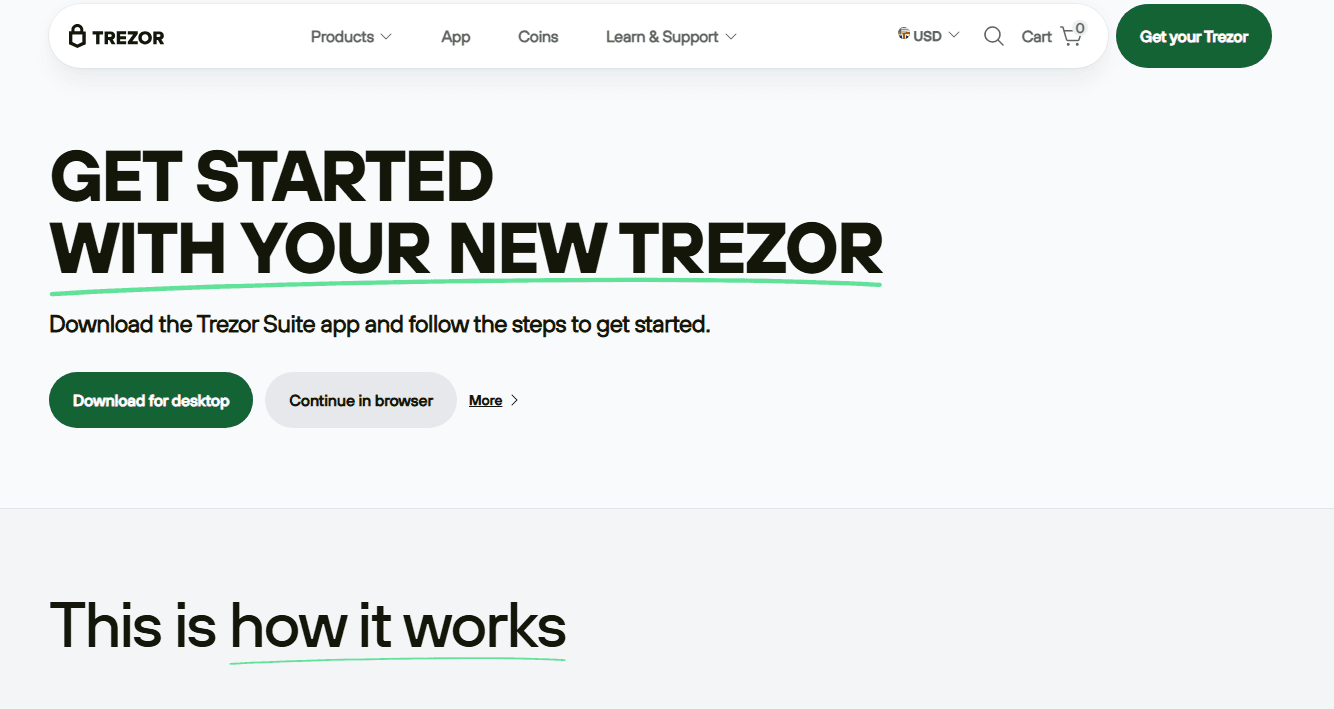
Trezor.io/Start – A Fresh 1200-Word Setup and Security Guide
Setting up a hardware wallet for the first time is a major step toward controlling and protecting your digital assets. Trezor, known for its open-source approach and strong security foundations, has designed a simple onboarding pathway often referred to as the Trezor.io/start process. This setup flow helps users understand how to power on the device, install the required software, generate a recovery seed, and prepare a secure environment for managing crypto.
Below is a newly written, detailed, original 1200-word explanation of the full Trezor setup experience.
1. Introduction to the Trezor.io/Start Setup Path
Trezor.io/start is essentially the beginning of your journey with the Trezor hardware wallet. It is not a login system, not an online account, and not a cloud-based wallet service. Instead, it acts as an onboarding guide made to ensure that every user understands the proper steps necessary to safely initialize their device.
Trezor products, including the Model One and Model T, follow a philosophy built around user control, offline key storage, and transparency. The setup process reinforces that your private keys never leave the device, never appear on your screen, and are never stored online. Everything begins with understanding how your wallet keeps your crypto safe—and that is exactly what the Trezor.io/start guidance aims to teach.
2. What You Need Before You Begin
To move through the setup smoothly, it’s best to gather all the required materials ahead of time. These items typically include:
Your Trezor hardware wallet
A USB cable (compatible with your model)
A computer or supported device
A private, quiet space where you can securely write down your recovery phrase
The recovery seed cards included in the box
Before beginning, inspect your device to ensure that the packaging was intact and there are no signs of tampering. Hardware wallets rely heavily on physical security, so starting with a device that hasn’t been altered is essential.
3. Installing the Trezor Suite
The Trezor Suite is the central application used to interact with your wallet. During the onboarding flow, the guide will instruct you to download and install this application. Trezor Suite serves several important purposes:
It provides an interface for creating accounts and managing crypto
It communicates with your hardware wallet
It helps you review transactions before signing
It allows secure updates to your device and firmware
Although it acts as the control center, the Suite never has access to your private keys. Everything critical is handled internally by your Trezor hardware wallet.
Once installed, open the Suite to begin the guided setup experience.
4. Connecting Your Trezor Device for the First Time
When you connect your device to your computer through the USB cable, the Trezor Suite will detect it. New devices typically arrive without firmware installed. This is intentional. Installing the firmware yourself ensures that you are the first person to load the operating software onto the wallet.
During the Trezor.io/start process, the Suite will prompt you to:
Install the latest firmware
Verify the firmware installation
Restart the device
Firmware is critical, as it powers the device and protects its internal systems. Once the firmware is updated and the device restarts, you can begin creating your wallet.
5. Creating a New Wallet
After firmware installation, you will be asked whether you want to create a new wallet or recover an existing one. Users new to Trezor choose “Create a new wallet,” which leads into the recovery seed generation process.
A. Understanding the recovery seed
A recovery seed is a sequence of words—either 12 or 24 depending on the model—that represents the cryptographic foundation of your wallet. It is the only backup you have. If your device is ever lost, damaged, or replaced, this seed allows you to restore all accounts and balances.
B. Generating your recovery phrase
Your Trezor device—not your computer—will display the recovery phrase. This ensures that no malware or compromised computer system can intercept it. You will write down each word in the exact order on the recovery card provided in your box.
C. Confirming your seed
To verify accuracy, the device may ask you to re-enter or confirm certain seed words. This ensures that your backup is complete and correct.
Once the recovery seed is confirmed, your new wallet is officially created and secured.
6. Why the Recovery Phrase Matters
During the Trezor.io/start guide, a major emphasis is placed on understanding the importance of the recovery phrase. This phrase is:
The only method of recovering your crypto
A universal backup for all your Trezor accounts
Something that no one else, including Trezor, can restore for you
Because of this, the phrase must be kept private, stored offline, and never typed into any website or digital device. The entire security concept of a hardware wallet depends on the phrase remaining offline and known only to you.
7. Setting Your Device PIN
Once the wallet is created, the next security step is choosing a PIN. The PIN is your everyday protection when turning the device on. Without the correct PIN, nobody can access or operate your Trezor.
The Trezor Suite will guide you through selecting a PIN number, and the hardware device will confirm each input. Multiple incorrect PIN attempts trigger security measures, including a complete reset if too many wrong guesses occur.
8. Exploring the Trezor Suite Dashboard
After those steps, you will finally reach the main Trezor Suite dashboard. This is your hub for managing digital assets. The interface will allow you to:
View your total portfolio value
Add cryptocurrency accounts
Monitor transaction histories
Manage tokens
Review market trends or price movements
Adjust wallet settings
Access security tools
The dashboard is designed with clarity and usability in mind, making it simple even for beginners to move through various features.
9. Adding Crypto Accounts and Assets
Before sending or receiving crypto, you must add accounts inside the Suite. For each supported blockchain—such as Bitcoin, Ethereum, or various tokens—you can create separate accounts.
Each account is tied to a public address generated by your hardware wallet. Even though you can view these addresses in the Suite, the private keys remain locked inside the Trezor device.
Once accounts are created, you can begin managing your funds.
10. Receiving Crypto Safely
To receive cryptocurrency, you use the “Receive” option inside Trezor Suite. The Suite will show a receiving address, and your hardware wallet will display the same address for confirmation.
This is a crucial verification step. It protects you from malware that may try to alter the address shown on your computer. Because the Trezor device has its own screen, you always confirm with the hardware first.
Once verified, you can share that address with the sender, and the incoming transaction will appear in your account once it is confirmed on the blockchain.
11. Sending Crypto with Offline Security
Sending crypto requires additional safety measures. When you initiate a transaction in the Suite:
You enter the destination address and amount.
The Suite sends the unsigned transaction to your hardware device.
Your Trezor displays the details.
You manually approve the transaction by pressing the physical buttons.
The device signs the transaction internally and sends it back to the Suite.
This offline signing process ensures your private keys never leave the device and no unauthorized action can be completed without your physical approval.
12. Updating Firmware and Maintaining Device Security
From time to time, Trezor releases firmware updates that add features, improve functionality, or increase security. The Suite will alert you when new firmware becomes available.
Keeping your device updated is essential for ensuring that you have the latest protections and support for new tokens or network features.
13. Recovering Your Wallet When Needed
If your Trezor device is lost or damaged, you can recover your crypto on a new device using your recovery seed. During the recovery process:
You select “Recover wallet”
You enter the seed words on the device
The wallet reconstructs your accounts based on the seed
Once completed, your balances and accounts reappear exactly as before.
Final Thoughts
The Trezor.io/start path is designed to introduce new users to the world of hardware-based crypto protection. With clear steps, emphasis on security, and a user-friendly interface, the setup experience helps you take full control of your digital assets. Whether you are new to crypto or transitioning from a software wallet, understanding how the Trezor device operates ensures long-term safety and confidence.