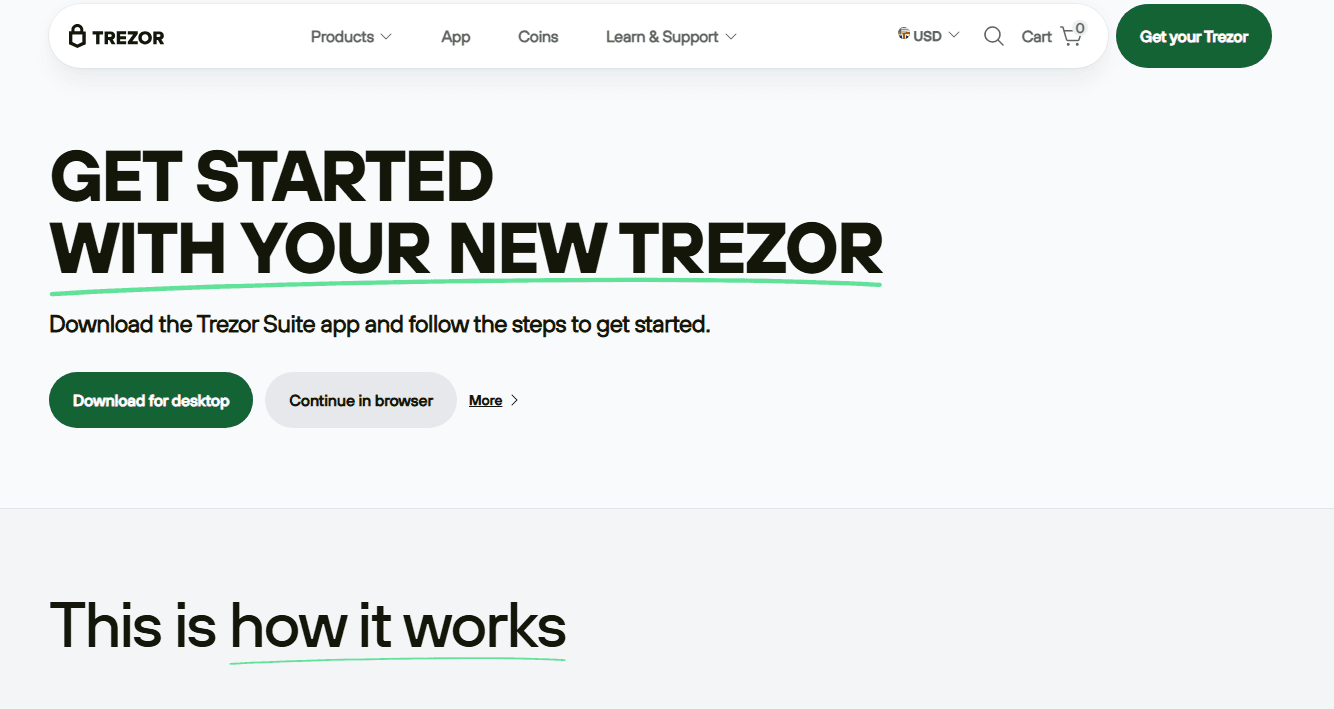
Trezor.io/Start – A Fresh 1200-Word Guide to Setting Up Your Trezor Hardware Wallet
Setting up a hardware wallet is one of the most important steps you can take to protect your digital assets. Trezor, one of the pioneers of hardware-based crypto security, provides users with a simple, guided process to get started. The setup journey typically begins at what is known as the Trezor.io/start path, which introduces new users to the essential steps required to activate their device, install the necessary tools, and learn the foundations of crypto security.
This guide delivers a completely new, easy-to-understand explanation of what users experience during setup, how the device works, and how to operate it safely—all in approximately 1200 words and without any links.
1. What Trezor.io/Start Represents
Trezor.io/start is not an account page and not a login portal. Instead, it acts as the official onboarding route created to guide users through the initial setup of any Trezor hardware wallet model. Whether you bought a Trezor Model One or a Trezor Model T, this is the starting point where you learn how to connect the device, install the Trezor Suite software, update the firmware, generate a recovery seed, and secure your new crypto wallet environment.
The purpose of this setup pathway is to ensure that every user understands the philosophy behind Trezor: you are the sole authority over your crypto assets, your private keys never leave your device, and your security depends on your control of your recovery seed and PIN code.
2. Preparing for the Setup Process
Before diving into the actual setup, it’s helpful to gather everything you need. This ensures that you move through each stage smoothly without interruption.
You will need:
A Trezor hardware wallet
A computer or compatible device
A USB cable suitable for your Trezor model
A clean, private space where you can generate and store your recovery seed securely
The recovery seed card that comes in the box
The recovery seed card is a small slip of paper where you will eventually write down your recovery phrase. This is the single most important component of your wallet security, so keeping it safe is essential.
3. Installing the Trezor Suite Application
The next part of the Trezor.io/start guide introduces you to Trezor Suite—the main control panel for your wallet. Trezor Suite is a desktop application that helps manage accounts, send and receive crypto, track balances, and oversee device settings.
Trezor Suite does not hold your private keys. Instead, it works alongside your hardware wallet, sending requests to the device and receiving signed transactions. Private keys never travel onto your computer, and they never appear on-screen. This is a fundamental security principle that defines how Trezor devices work.
Once the application is installed, you will launch it and follow the on-screen prompts that guide you through connecting your hardware wallet.
4. Connecting the Hardware Wallet to Your Computer
When you plug your Trezor device into your computer for the first time, it will typically be in a basic mode awaiting firmware installation. The firmware is the secure operating system that runs on your Trezor wallet and ensures proper functioning.
The Trezor.io/start walkthrough will prompt you to install the latest firmware version. This is a necessary step, as new devices often ship without firmware to ensure that the user installs it securely themselves. After installing firmware, the device will restart and prepare itself for wallet creation.
5. Creating Your New Wallet for the First Time
Once the firmware is installed and verified, you will access the Trezor Suite dashboard where an important choice will appear: create a new wallet or recover an existing wallet. If this is your first time using a Trezor device, choosing to create a new wallet will generate your recovery seed.
A. Generating the recovery seed
Your Trezor device will display the recovery words on its screen. Depending on the model, this will be a 12-word or 24-word phrase. These words are shown only on the hardware wallet, not your computer, to prevent any software-based attackers from seeing them.
B. Writing down the recovery words
Using the recovery card that came with your device, carefully write down each word in the exact order shown. There should be no digital photos or screenshots of this phrase. The entire purpose of a hardware wallet is to keep this information isolated from anything connected to the internet.
C. Verifying the phrase
Trezor will ask you to confirm certain words to ensure the phrase is recorded correctly. Only after verification will the wallet be finalized.
6. Understanding the Importance of the Recovery Phrase
One of the core teachings emphasized during the Trezor.io/start process is that your recovery phrase is the ultimate backup of your wallet. Anyone who has it can gain access to your crypto, even without your device. And if you lose the phrase, your crypto cannot be restored.
Trezor does not have access to your seed. No one else can reset or recover your wallet for you. This is why proper handling of the recovery phrase is essential for long-term safety.
7. Setting Your Device PIN
After securing the recovery phrase, Trezor will prompt you to set a PIN. This PIN is required every time you power on the device. It protects your Trezor from unauthorized access if someone physically obtains it.
Choosing a secure PIN is critical. If too many incorrect PIN attempts are made, the device will initiate a security reset to protect your information.
8. Navigating the Trezor Suite Dashboard
Once your wallet is created and secured, the Trezor Suite interface acts as your management center. It displays all your crypto accounts, the total value of your portfolio, and all recent activities.
The dashboard includes tools and features such as:
Portfolio overview
Transaction history
Address book
Price information
Security settings
Account labeling
Network settings
Trezor Suite is designed to be intuitive, allowing both new and experienced users to move through its features comfortably.
9. Adding Cryptocurrency Accounts
Trezor supports many digital assets. To manage each asset, you must add accounts manually through Trezor Suite. For example, if you want to store Bitcoin, Ethereum, or other supported coins or tokens, you will click “Add Account” and choose the appropriate blockchain.
Once added, each account is associated with your hardware wallet’s private keys, which remain safely stored on the device at all times.
10. Receiving Crypto into Your Trezor Wallet
Receiving funds is a simple process, but Trezor places a strong focus on verification. When you attempt to receive crypto, Trezor Suite will show you a receiving address. At the same time, your hardware wallet will show the corresponding address on its display.
Always verify that the address on the device matches the one shown on the computer screen. This step protects you from malware that could try to replace your address with one belonging to an attacker.
11. Sending Crypto Securely
Sending crypto from your Trezor wallet requires multiple confirmation steps to ensure safety.
Here’s what happens:
You create the transaction in Trezor Suite.
The Suite sends the unsigned transaction to your Trezor hardware wallet.
The device displays all transaction details, including the amount and destination address.
You must manually confirm the transaction by pressing the device buttons.
After approval, the device signs the transaction and sends it back to the Suite for broadcast.
This process guarantees that no transaction can be completed without your direct physical approval.
12. Updating Firmware and Maintaining Security
Trezor occasionally releases firmware updates to improve functionality, add support for more cryptocurrencies, or address potential vulnerabilities. When updates are available, Trezor Suite will notify you.
Keeping firmware updated ensures that your device remains secure, compatible, and reliable.
13. Recovering Your Wallet Using the Recovery Seed
If your device is lost, damaged, or replaced, your recovery phrase becomes essential. During recovery, instead of creating a new wallet, you select the option to restore from the seed. The device will guide you through entering the recovery words securely through the hardware interface.
Once recovery is complete, all your accounts and balances return exactly as they were.
Conclusion
The Trezor.io/start journey is designed to help both beginners and advanced users understand the importance of self-custody. By guiding you through steps like firmware installation, seed generation, PIN protection, and account setup, Trezor ensures that your digital assets remain secure under your full control.